Web of Frustration
Cassie Maloney | OCT 31, 2023
mindfulness
kids
creativity
frustration
emotional regulation
learning
education
Cassie Maloney | OCT 31, 2023
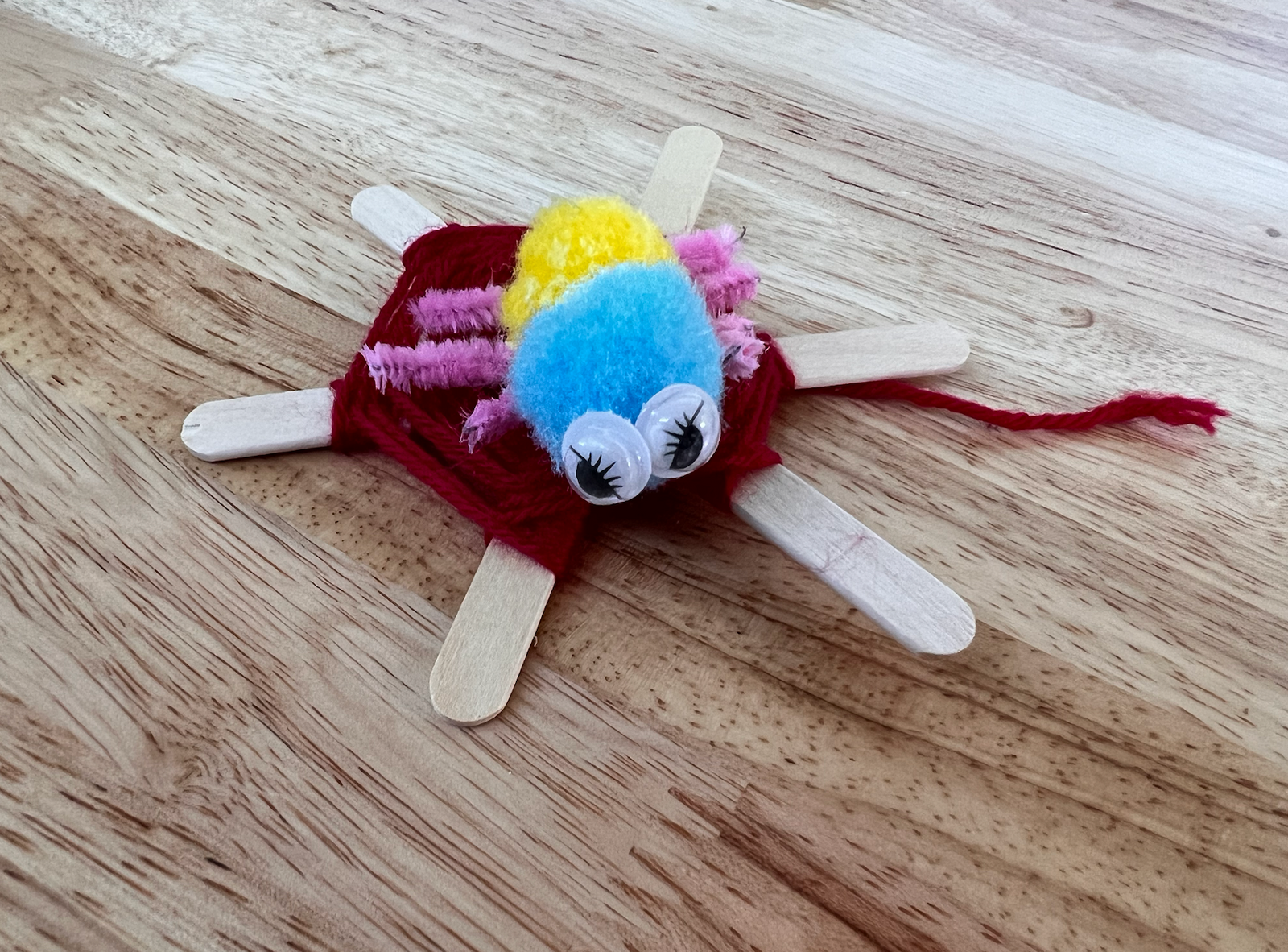
"The kids were so frustrated by today's project." I told my husband as I walked in the door. "They probably needed it." He smiled, knowing how I would react.
I just finished teaching an art project, instructed in a new way. We made spider webs from yarn, popsicle sticks, and complete directions for every step. We topped the webs with cotton ball spiders, which, I told the kids, they would decide how to make on their own. No directions whatsoever. For me, it was an experiment in novelty and creativity. For them, according to their reactions of sighs and groans, it was a not-so-welcome surprise.
I was curious, but not shocked by their reactions. On their own, I know that each child spends hours creating and experimenting. Art, backyard obstacle courses, video game characters, imaginary friends, you name it. But in a school setting, the posted rules and tight schedules ask for something different. School asks them for consistency, predictability, and compliance. Of course, children need to learn these skills and when to use them. But, I've always cherished a bit of organized chaos. So there I stood, face to face with frustrated 7 year olds who wanted more from me. They begged for the rules of the craft, how to make it predictable and compliant with made up guidelines.
Over the next hour I gave the students only a certain amount of guidance. This consisted of praising their own ideas and assuring them that I would not explain how I made my spider. My homespun spider was now resting in the middle of the table so they could use it as an example. It wasn't as appreciated as I had expected.
The invitation to look at an example brought them more frustration. What I thought would be a helpful tool, they saw as a reminder that their own projects would turn out different. I reminded them that the blue cotton ball blob in the middle of the table was one of many ways to make this project. Because I had taken away the predictable nature of crafting, it was my job to encourage them to think differently. I told them how exciting it was to see each creating something different. I asked questions such as "Does your spider actually need to have 8 legs?" These were simple tools to invite them to be creative and think flexibly.
Over the next 15 minutes I watched kids decide if their spider would have 6 or 8 legs. I watched them cut and glue, ten kids creating ten different spiders. Some legs attached a the top, some at the sides or underneath. I watched extra pieces passed across the table to others who needed more supplies. Variations appeared that I liked quite a bit more than my own.
After a while, I decided to help one student. Her questions led to a the design of a unique spider. But, those pesky legs weren't sticking to the cotton ball body. Instead of putting the legs on for her, as requested, I made a compromise. While I held the pom pom still, she rearranged the pipe cleaners. This part was a lesson for me. Part of her frustration was not designing the spider. Her small hands had become overwhelmed by the sticky glue, creating a mash of craft supplies. I hadn't anticipated this, and wouldn't have noticed if I hadn't listened to her questions closely.
As teachers and parents, it's important to figure out what our kids are struggling with. It is an overwhelming struggle, or is it one that gives opportunity to learn and grow? Should we guide them or choose to not intervene (despite our desire to help)? We, ourselves, must be creative and curious as we bring novel activities and instruction to our kids' lives. What kind of support will keep them in a space of curiosity, willing to work through the frustration?
The students picked up their completed projects and gathered at the door. Feeling a little unsure myself, I said "I know today's project was tricky but I am SO PROUD of you for working through it! Everyone's spider looks AMAZING!" I gave them all an "air high five" and added "Next week I'll bring a less tricky project for you." To which they responded
"NOOOOO, more tricky, more tricky!"
I felt my own insecurity melt away as I saw the confidence on their faces. It was worth stepping out of my comfort zone and asking my students to join me as we explored loosening the rules.
I chuckled back at my husband, "Yes, they definitely did. We could all use it sometimes."
Cassie Maloney | OCT 31, 2023
Share this blog post
 OfferingTree